Does my child need glasses or contact lenses?
Glasses may be needed for short-sightedness, long-sightedness or astigmatism. Contacts are an option from around age 6, especially for sport or if your kid just doesn’t want to wear glasses. We assess lifestyle, eye health and maturity before recommending the right path.
What are the most common childhood eye conditions?
Myopia, hyperopia, astigmatism, amblyopia (lazy eye) and strabismus (turned/crossed eyes). Regular tests catch these early and support healthy development.
How can I best protect my child's eyes?
Outdoor play, a nutrient-rich diet, UV-protective sunglasses, limited screen time, and regular breaks from close-up tasks all help.
What if there's a family history of vision problems?
Family history of myopia, glaucoma or strabismus raises your child’s risk. If it runs in the family, we would recommend starting checks earlier and monitoring more closely.
When should my child have their first eye exam?
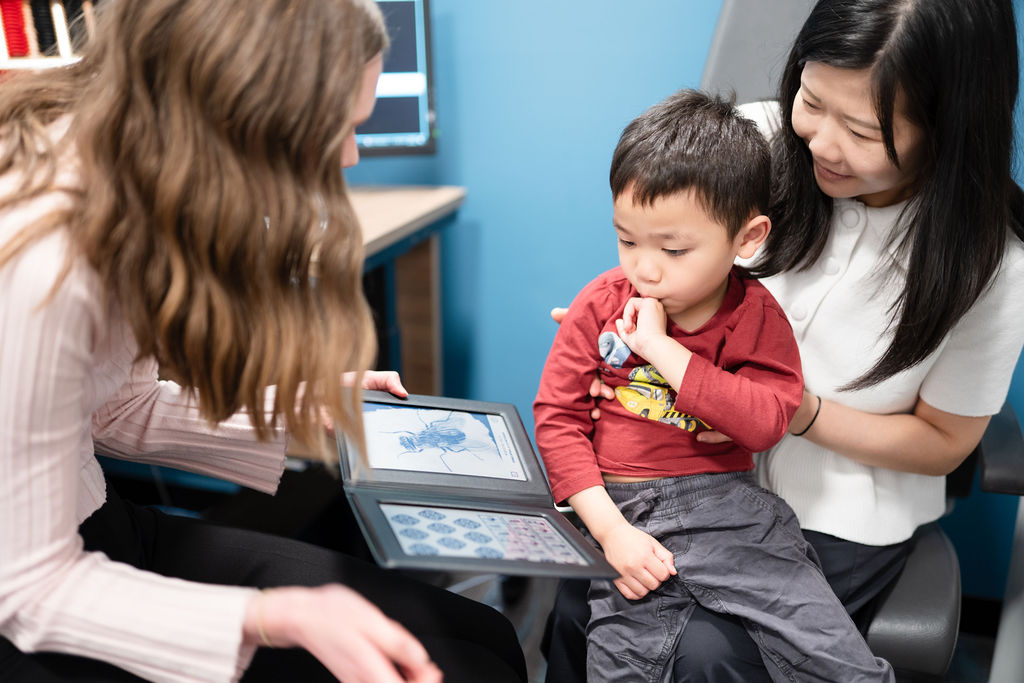
We recommend a first comprehensive test around age 3, and again before starting school. Early tests catch things like lazy eye or a turned eye while they’re easiest to treat.
What are the signs my child may need glasses?
Squinting, frequent eye rubbing or blinking, headaches, holding things too close, or trouble seeing the whiteboard. Any of these — book a test.
What's the advice on screen time and kids' eyes?
The 20-20-20 rule (every 20 minutes, 20 seconds looking 20 feet away), limiting recreational screen time, keeping screens at eye level, and encouraging daily outdoor time.
Are school vision screenings enough?
No – they’re limited to distance vision and don’t check eye health or how well the eyes work together. A comprehensive test is the only way to properly rule things out.