St Kilda Eyecare Myopia Control
Myopia Control in Kids

What causes Myopia?

Short-sightedness happens when the eyeball grows longer than it should, so light focuses just in front of the retina instead of directly on it.

Key contributing factors:

  • Genetics: One myopic parent triples your child’s risk; two myopic parents makes it about six times more likely
  • Ethnicity: Kids of Asian descent are more likely to develop myopia than those of Caucasian descent
  • Age of onset: The younger a child becomes myopic, the faster their eyes tend to keep growing, often leading to more severe myopia later
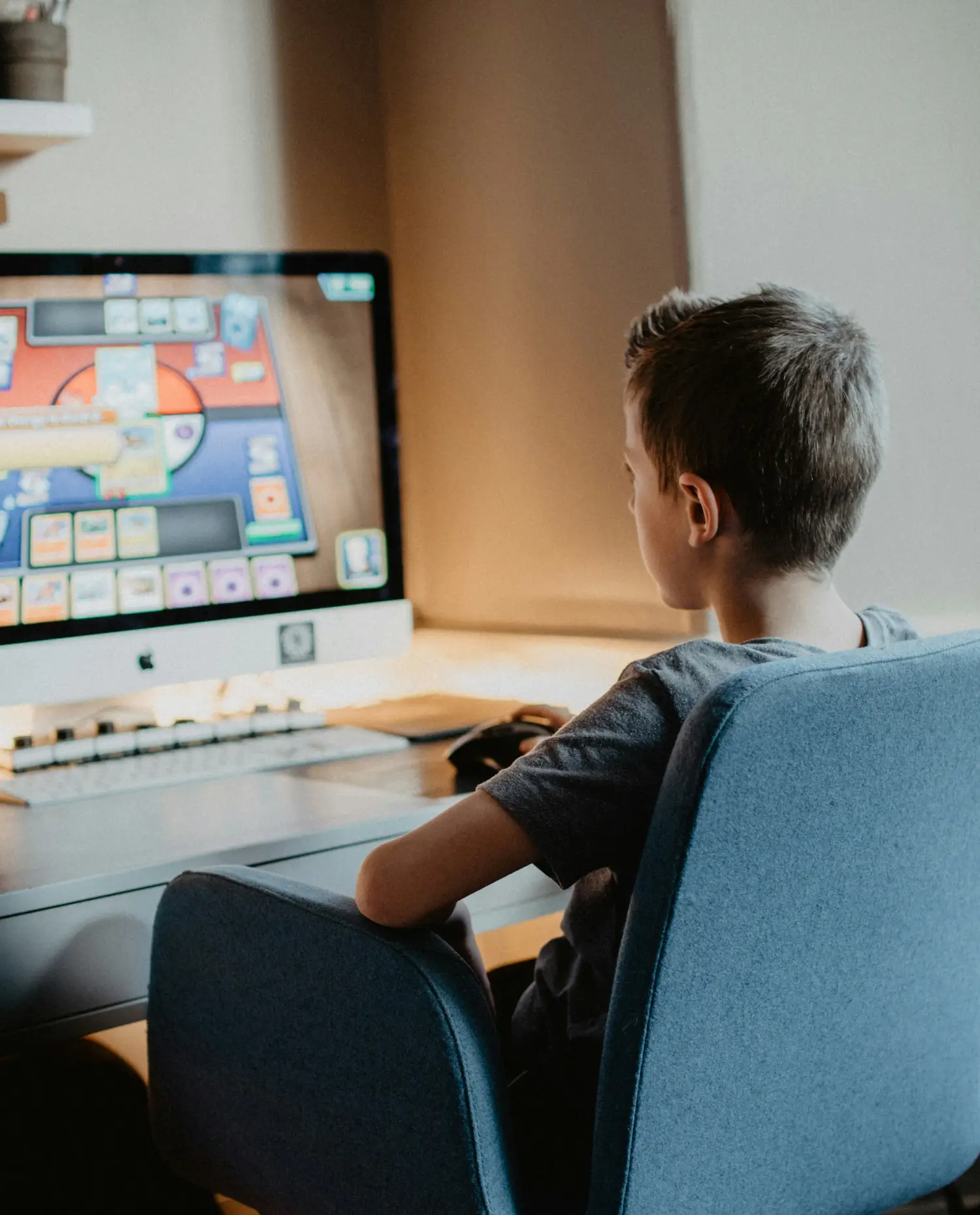
  • Environment: Excessive near work (reading, screens), not enough breaks and limited time outdoors all speed up progression
  • Under or over-corrected glasses: Wearing the wrong prescription (or none, when needed) is known to accelerate progression, not slow it.

Myopia is more than a "needs glasses" problem

Myopia rates have climbed sharply since 2019 and it’s estimated that by 2050, half the world’s population will be short-sighted. The real issue isn’t blur – it’s that myopia is strongly linked to cataracts, glaucoma, retinal detachment and myopic macular degeneration, all of which can cause irreversible vision loss.

The risk climbs with severity: every extra dioptre of myopia increases the risk of myopic maculopathy – an irreversible cause of blindness – by around 67%.

That’s why we treat myopia control as genuine preventative eye health, not just a way to reduce how often glasses need updating.

Myopia symptoms to look for

Myopia, also known as short-sightedness, is mostly presented with symptoms of:

  • Not being able to see far (e.g. whiteboard/TV/Road signs)
  • Needing to be close to the TV
  • Bringing digital devices (e.g. iPad, iPhones) very close
  • Headaches
  • Squinting
  • Frequently blinking

How we slow the progression

We typically recommend combining two or more strategies for the best result. There’s no single fix that suits everyone, so we’ll talk through what’s right for your child.

Lifestyle and visual environment

Max 2 hours a day on digital devices
Hold reading material further than forearm’s length away (fist to eye, hand to elbow — that’s your minimum distance)
The 20-20-20 rule — every 20 minutes, a 20-second break looking 20 metres or further
At least 90 minutes outside daily, even when it’s overcast (with sun protection)
Keep prescriptions current — under-correction speeds up progression, it doesn’t slow it

Orthokeratology (Ortho-K)

Custom night lenses that gently reshape the cornea while your child sleeps, giving clear daytime vision without glasses or daytime contacts — fully reversible, non-surgical, and suitable from as young as 5. On average, Ortho-K slows progression by around 50%, with some cases showing results as high as 90%.

Read more on Ortho-K

Myopia control spectacles

Modern lenses like Hoya’s MiyoSmart (with D.I.M.S. technology) go well beyond old-style bifocals, slowing progression by around 60% while fitting into most standard frames.

Atropine eye drops

Low-dose atropine (0.025% or 0.05%) offers real myopia control without the glare and near-vision blur that came with older, higher-dose formulations. Roughly 33% reduction at 0.025%, and around 50% at 0.05%. Sometimes used alongside Ortho-K or soft lenses.

Soft myopia control contact lenses

A solid option for kids who aren’t suited to Ortho-K. Lenses like CooperVision’s MiSight are FDA-approved and offer around 50% efficacy, using the same peripheral-defocus principle as Ortho-K and MiyoSmart.

When to start

As soon as there are any signs – the risk climbs fast, so waiting isn’t a neutral choice. A child doesn’t even need to be myopic yet to start: kids who are less long-sighted than typical for their age (“pre-myopes”) are more likely to become short-sighted later, and lifestyle changes now can make a real difference.

When to stop

Generally, myopia control continues until the eyes stabilise – usually into early adulthood. Research shows only 50% of myopic eyes stabilise by 16, 75% by 18, and 90% by 21. Kids who spend 3 hours or less a day on near work outside school tend to stabilise earlier. Once control is no longer needed, we still recommend an eye exam every two years to keep things on track.

Myopia FAQs

What is Myopia?
Short-sightedness — clear near vision but blurry distance vision, caused by light focusing in front of the retina rather than on it. It affects all ages but is most significant in kids, especially between 6 and 13.

Myopia image

What causes Myopia?
People who are short-sighted (myopia) will experience blurry vision in the distance. Most often, this is due to the eyeball becoming longer than normal (excessive axial elongation). Hence the light rays coming in the retina are focused in the front of the retina.

The current research suggests the excessive axial elongation of the eyeball may be largely driven by “hyperopic peripheral defocus”. This is where the rays of the light coming from the side get focused behind the peripheral retina. Since the light is focused behind the retina, it signals the eyeball to grow longer to “catch up” with the defocused lights, hence elongation of the eyeball and worsening of myopia.

Causes_Myopia

There have been many scientific journals published in the last few decades that have agreed upon the contributing factors to the worsening of myopia. There are many different factors, but the most significant contributors are genetics, race, age, visual environmental factors, and the undercorrection/overcorrection of spectacles.

Family history plays a big part in myopia. If one of your parents is myopic, you are three times more likely to be short-sighted, if both of your parents are myopic then you are six times more likely to be myopic. However, you can still develop myopia without having immediate family members who have it.

Children of Asian descent are also much more likely to become myopic then ones from Caucasian descent.

Furthermore, children that have become short-sighted at a younger age tend to develop more severe myopia later in life. This is because the younger the child, the faster the eyeball grows, and researchers have found children before the age of 13 are more likely to have abnormal and excessive eyeball growth which results in great severity of myopia later in life. Fortunately, for most people, the eyeballs will stop growing past a certain age, though this age differs upon individual.

The one factor that we have more control over and that is the visual environmental factors. Myopia tends to develop faster with excessive near work (e.g., reading, studying, computers, tablets etc.), not taking regular breaks from near work and not enough time spent outdoors in the sun. The different methods of how to slow down short-sightedness (myopia control) will be discussed in the section “How to reduce progression of Myopia”.

Lastly, there has been strong evidence that proves under or overcorrecting spectacles are known to exacerbate myopia progression. That is if the child is wearing the incorrect glasses or not wearing spectacle when it is needed, their myopia is likely to worsen faster. Historically, optometrist may have undercorrected myopia prescription in the belief of thinking it will slow down myopia. However, it has been found to accelerate it instead. Therefore, it is imperative to always wear the most up to date prescription and get your eyes tested regularly!

How is Myopia measured?
Traditionally, the method used to determine whether a person is myopic is by refraction. That is the power or prescription of the eye that is required to best correct one’s vision. It is not until recently, axial length (eyeball length) measurement has been incorporated in the clinical setting to assess the risk factors that comes with myopia.

Myopia can be classified as mild, moderate, and high.

  • Mild: -0.50D ~ -3.00D
  • Moderate: -3.00D ~ -6.00D
  • High: -6.00D or more

Axial length is the measurement of the length of the eyeball and has been shown to have a strong correlation with the severity of myopia. The higher the power, usually the longer the eyeball. There are however some cases observed where the eyeball may grow longer while the prescription stays the same. Due to many complex factors, we do not have a definite formula that equates to how much changes in prescription are to the change of length in the eyeball, but we do know that the longer the eyeball the more likely it is for the person to develop adverse eye health problems. Therefore, we believe that to achieve a long-term myopia management plan, axial length measurements are more important than obtaining the prescription alone.

While most optometry practices may take part in reduction of myopia progression (Myopia Control) by measuring only the prescription of the patient over time. At A+ Optometry, not only do we check the prescription, but we are also proud to be able to take it one step further by measuring axial length with our state-of-the-art Topcon MYAH (hyperlink to technology page). With both prescription and axial length data, we can monitor myopia progression in a much more holistic fashion.

Please read the section “Why Reduce Myopia Progression?” for more.

Why Reduce Myopia Progression (Myopia Control)?
While blurry vision is easily correctable with spectacles and contact lenses. There are many eye health issues associated with myopia. Unfortunately, this is largely due to the nature of an excessively long eyeball. The greater the severity of myopia, the more at risk of developing eye health issues later in life.

Myopia is STRONGLY associated with: Cataracts, Glaucoma, Retinal Detachment and Myopic Macular Degeneration. These are diseases that can cause serious blindness!

Myopia-Progression

As illustrated from the table above, the likelihood of developing these eye diseases across the lifetime of a person increases dramatically the higher the myopia power is.

Recent studies have found that every 1D (dioptre) increase in myopia increases the risk of myopic maculopathy by 67% and myopic maculopathy is an irreversible blindness!

It is important to know that the purpose of Myopia Control is to slow down the progression of myopia (eexpertly in children from age or 6 to 13) but there are no known methods that can completely STOP the progression of myopia.

However, the current evidence-based options that are available will be listed in “How to Reduce Myopia Progression”.

How to Reduce Myopia Progression?
There are several Myopia Control strategies used to reduce the progression of myopia. Quite often, we would recommend using two or more strategies to achieve a good control.

The five strategies we provide here is:

  • Visual Environmental & Lifestyle Changes
  • Orthokeratology (Ortho-K)
  • Myopia Control Spectacles
  • Atropine Eye Drops
  • Soft Myopia Control Contact Lenses

With the above five strategies, we recommend discussing with our optometrist to see which one is best for you!

Visual Environmental & Lifestyle Changes

Recent studies have found that Myopia tends to develop faster with excessive near work (e.g., reading, studying, computers, tablets etc.), and not enough time spent outdoors in the sun.

Hence, the guidelines are:

  • A maximum of 2hrs each day on digital devices (e.g., iPad, smart phones, gaming consoles etc.).
  • The distance of where you hold the reading material should be further than the length of your forearm. The way to measure it is to hold your fist on your eye and place your hand on your elbow. This is the distance where you should hold your books or devices and not any closer.
  • Spending regular breaks from reading with the 20/20/20 rule. That is every 20minutes from reading, take a 20 second break by looking at something 20 metres or further!
  • A minimum of 90 minutes each day outside in the sun, even on a cloudy day. Keeping in mind to be sun smart, have sunscreen and hats.
  • Making sure you are wearing the most up to date prescription and have your eye regularly examined. We recommend anyone under the age of 18 to have their eye examined annually, unless suggested by the optometrist.

Following these five tips will help with slowing down short-sighted progression.

Orthokeratology

Orthokeratology, or Ortho-K, is a therapy that allows you to enjoy being able to see during the day without needing to wear glasses or contact lenses. This all happens without any surgical intervention and it is all fully reversible too.

It is a type of rigid gas permeable contact lens that helps improve your sight while you sleep, and it does so by gently reshaping the surface of your cornea, a little bit like braces, but just for the eyes. It has been designed to be worn while you sleep and will give you clear vision during the day once you have taken out the lenses in the morning. One of the key benefits of Ortho-K, is the ability to be fitted on young children, as early as the age of five.

Additionally, it has been shown that Ortho-K lenses can reduce the progression on average by approximately 50%, however it has been anecdotally suggested to halt the progression up to 90%!

Current medical researchers suggest that myopia is worsened due to images focusing further behind the peripheral retina, and this encourages the eyeball to grow longer. Ortho-K allows both the images in the peripheral retina to be focused in front while having the central retina to focus the same, this will slow down the elongation process of the eyeball and therefore, reduce the rate of myopia progression and thus controlling myopia.

Orthokeratology at A Plus Optometry

See the Ortho-K page for more information about the Ortho-K Programme at A+ Optometry.

Myopia Control Spectacles

Historically, the only options of myopia control spectacles were bifocals and progressive lenses. However, this has changed when the Hoya’s MiyoSmart with D.I.M.S. technology was launched in 2020.

The traditional bifocals and progressive lens have been proven to slow down myopia by up to 33%, but this data appears to be only valid for a limited group of patients with certain eye conditions. This means for most patients having these options makes no significant difference compared to single vision lenses. Hence, the options to correct myopia effectively with spectacle were very limited.

Myopia-Control-Spectacles_01

The Hoya MiyoSmart lens has been proven to slow down myopia progression by 60% for all myopic patients and it can be fitted into most spectacle frames.

Unlike traditional bifocals or progressive lenses, MiyoSmart lenses provide Myopia Control by refocusing the peripheral rays evenly to the front of the retinal, while keeping the rays always focused on the central retinal. This has been recognized as what slows down the elongation of the eyeball. Hence, effective myopia control.

Myopia-Control-Spectacles (1)

Atropine Eye Drops

In the last few decades, Atropine eye drop has been recognized to be an effective option in Myopia Control and it has become a more and more popular option for Myopia Control.

The original prescribed dose for Atropine was 1%, this dosage was known to be very effective at Myopia Control, however it does come with a few undesirable side effects. Unfortunately, the effect of using the Atropine 1% drop is the dilation/expansion of the pupil and extreme blurriness for near tasks. This means the patient who instilled this drop will have constant glare issues (due to dilated pupils) and difficulty with reading up close. These side effects are quite undesirable for school age children.

Fortunately, there have been more studies done in the recent years that suggest a lower dose Atropine can still offer a good amount of myopia control without the significant amount of glare and blurriness up close. The recommended dosage as of most recent research is Atropine 0.025% or 0.05%.

Atropine is sometimes used in conjunction with the other treatments like Ortho-K or soft contact lens options. However, there are still many areas yet to be explored with the use of Atropine treatment, this is eexpertly so with regards to how effective it is in combination with the other strategies we had suggested in this section and there are still many ongoing researches exploring this area. What we do know is that if the Atropine 0.025% used by itself will provide an approximate 33% reduction whilst Atropine 0.05% it will provide an approximate 50% reduction in myopia progression.

The mechanism of why atropine helps with myopia progression is not fully understood and is still being debated in the scientific community.

Soft Myopia Control Contact Lenses

Soft Myopia Control Contact Lenses is another useful tool we have to fight against myopia progression. This option is eexpertly helpful if patients are not suitable for Ortho-K.

There have been several types of soft contact lenses released in the market that have been proven to help with Myopia Control. One of the most recent FDA approved solutions is Coopervision’s MiSight contact lenses. Whilst there are a few other brands of contact lenses that have also been shown to be similar in efficacy, most of them are off labels. Overall, the efficiency of soft myopia control contact lenses available in the market is at approximately 50%.

Similar mechanism with Ortho-K lenses and MiyoSmart, these soft contact lenses work by shifting the peripheral rays to the front of the peripheral retina whilst keeping a focused point in the central retina, ultimately slowing the elongation of the eyeball.

Soft-Myopia

The above information is a summary of the Myopia Control strategies we provide at A+ Optometry. We strive to be at the forefront of new research and technologies which enable us to provide better eyecare for not just our younger generation, but to all generations in your family!

When to start Myopia Control?
As soon as there are indications of possible myopia development. We have to be very proactive as every 1D (dioptre) increase in myopia increases the risk of myopic maculopathy by 67% and myopic maculopathy is an irreversible blindness! We need to stop this becoming a problem affecting our future generation.

Furthermore, a child does not have to be myopic to start myopia control. This is because a child can be much less hyperopic (long-sighted) compared to their age normal group which indicates that they are more likely to become myopic when they grow older. These groups of children are what we call “Pre-myopes”. Whilst we do not necessarily need to start using strategies like Ortho-K, or myopia control spectacles. We would recommend lifestyle changes that limit the time in front of devices, more times outdoors in the sun and taking regular breaks from reading and near tasks (See How to Reduce Myopia Progression).

When to finish Myopia Control?
In most cases, we recommend continual myopia control for your child until there is stabilization in the eye and this usually when your child reaches adulthood. Hence, it is likely myopia control needs to continue until your child finishes school or even college or university.

A study published in 2013 that had found that:

  • Only 50% of the myopic eyes stabilized by age of 16.
  • 75% of the eyes stabilized by age of 18.
  • And 90% of the eyes stabilize by age of 21.

Furthermore, children that spend 3 hours or less each day with near work (excluding school time) in their leisure, or homework are more likely to stabilise by the age of 16.

Ultimately, once the myopia control is no longer needed, we always recommend having an eye examination at least once every 2 years to make sure the eyes are maintained healthy.

Additional Resources
For further resources about Myopia Control, you can visit https://www.mykidsvision.org and https://www.myopiaprofile.com

Worried about your child's eyes?

If you are concerned that your child to have vision issues or worried about the risk of Myopia?
Book an appointment to see us at St Kilda Eyecare.

159 Acland St
St Kilda VIC 3182

03 9537 3937 Book Online